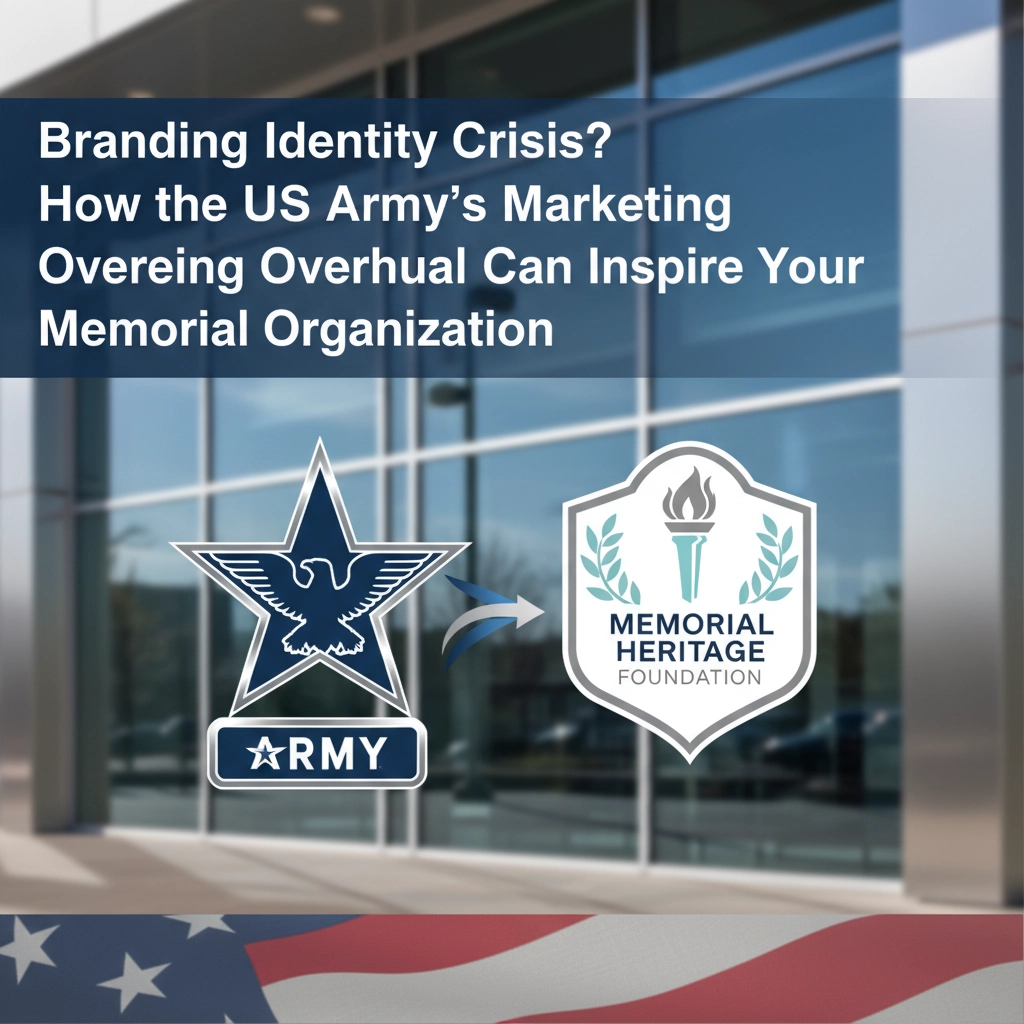
Your memorial organization isn't alone if you're struggling with brand identity. Even the most established institutions face moments when their messaging feels disconnected from their audiences. The US Army recently confronted this exact challenge, undertaking their first comprehensive rebrand since 2001. Their transformation offers a powerful blueprint for memorial organizations ready to bridge the gap between heritage and relevance.
The Army's approach proves that successful rebranding isn't about abandoning your core mission: it's about realigning your organization to communicate that mission more effectively. Your memorial organization can apply these same strategies to reconnect with diverse audiences while honoring the legacy you protect.
Understand Your Audience's Perception Gap
The Army's rebrand began with a sobering realization: young people weren't seeing the organization as a path to purpose, passion, community, and connection. Major General Alex Fink, Chief of Army Enterprise Marketing, discovered that while youth craved these experiences, they didn't perceive the Army as offering them.
Your memorial organization likely faces a similar perception gap. Visitors might view your site as purely historical rather than personally meaningful. Families might see formal ceremony instead of genuine connection. Students might encounter academic obligation rather than emotional discovery.
Conduct honest research about how your current audiences perceive your organization. Survey recent visitors, interview community members, and analyze engagement metrics across your platforms. Ask specific questions about what drew people to your memorial and what barriers prevented deeper engagement.

This research will reveal the disconnect between your intended mission and public perception. The Army learned that their recruiting messaging wasn't reaching people who would thrive in military service. Your research might show that your memorial's most powerful stories aren't reaching the families who need them most.
Restructure for Unified Messaging
The Army's success stemmed partly from organizational restructuring. They created the Army Enterprise Marketing Office (AEMO) as an in-house creative function, then integrated marketing and recruiting under unified leadership. This eliminated silos between different departments and ensured real-time feedback between field teams and marketers.
Your memorial organization benefits from similar integration. Break down barriers between visitor services, educational programming, community outreach, and digital communications. Create regular touchpoints where staff members share insights about visitor responses, volunteer feedback, and community engagement.
Establish a unified content calendar that coordinates your social media, educational programs, special events, and donor communications. When your school outreach coordinator knows about upcoming digital initiatives, they can reinforce those messages during classroom visits. When your volunteer coordinators understand your brand positioning, they communicate more consistently with visitors.
This structural alignment ensures that every visitor interaction reinforces your core message, whether they encounter your organization through a virtual tour, educational program, or memorial ceremony.
Choose Authentic Stories Over Ceremonial Language
The Army shifted from polished slogans to authentic storytelling. Their campaigns feature real soldiers describing genuine experiences: the nervousness of boarding a bus to basic training, the bonds formed through accomplishing difficult tasks together. They prioritize "relevance, relationship, and respect" over ceremonial messaging.
Your memorial organization can apply this principle by moving beyond reverential, formal language toward personal connection. Instead of describing "the ultimate sacrifice made by our brave servicemen," share specific stories about individual veterans: their hopes, challenges, humor, and humanity.

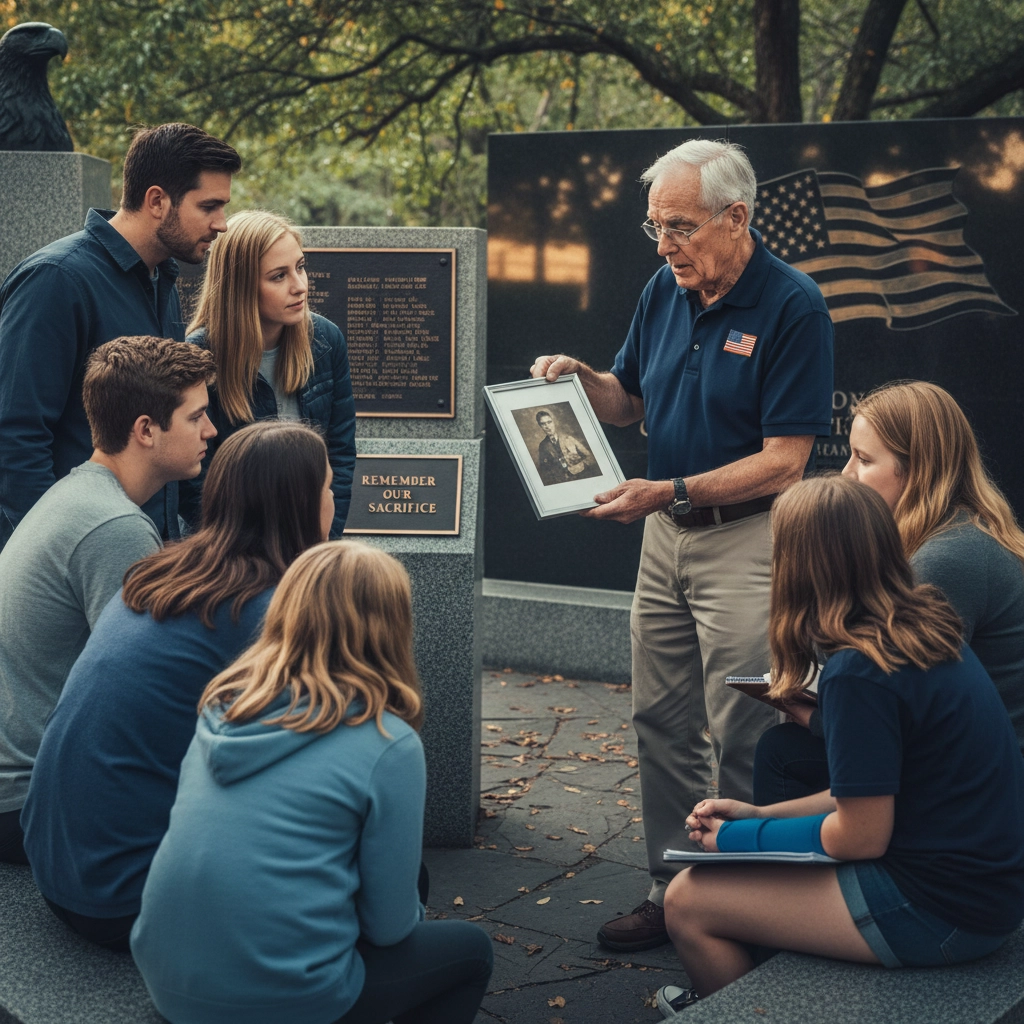
Replace generic memorial language with specific details that help visitors understand the person behind the service. Describe the letters a soldier wrote home, the photographs they treasured, the dreams they held for after deployment. These personal elements create emotional connection that ceremonial language cannot achieve.
Train your staff and volunteers to share stories conversationally rather than reciting prepared speeches. Encourage them to ask visitors about their own family military connections and build conversations around those personal links.
Balance Heritage With Evolution
The Army's decision to resurrect "Be All You Can Be" demonstrates how to honor institutional heritage while signaling transformation. The tagline carried credibility from the 1980s-1990s, yet its deployment within a modernized visual system prevented it from feeling outdated.
Your memorial organization can identify core mission elements that resonate across generations, then recontextualize them for contemporary audiences. This proves more effective than either rejecting tradition entirely or preserving outdated messaging unchanged.
Examine your organization's founding principles and historical messaging. Which elements still inspire people today? Which phrases or concepts have become barriers to connection? You might discover that your core mission: preserving memory, honoring service, educating communities: remains relevant, but your expression of that mission needs updating.
Consider how different generations relate to military service and memorial experiences. Veterans from different eras bring different perspectives. Families with current service members face different challenges than those whose service ended decades ago. Your messaging should acknowledge these differences while finding common ground.
Develop Comprehensive Brand Systems
The Army avoided piecemeal updates by creating an integrated system including a redesigned logo, custom typography, expanded color palette, iconography, photography guidelines, and motion graphics. This comprehensive approach ensures consistency across all touchpoints while providing flexibility for different contexts.
Your memorial organization needs similar systematic thinking. Establish clear guidelines for how your brand adapts across physical memorials, digital platforms, educational materials, donor communications, and community programs. Create templates and style guides that volunteers and staff can apply consistently.
Develop visual elements that work across digital screens, printed materials, outdoor signage, and ceremonial contexts. Your color palette should reproduce accurately on everything from mobile apps to bronze plaques. Your typography should remain readable in both intimate brochures and large-scale memorial walls.
Consider how your brand translates across different emotional contexts. Your approach to Memorial Day ceremonies might differ from your school presentation style, but both should feel authentically connected to your core identity.
Research-Driven Positioning Strategy
The Army's multiyear research identified "Possibilities" as their core positioning statement. This single concept provided focus for all creative decisions, from visual design to campaign narratives to messaging strategy.
Your memorial organization should conduct similar research to identify the singular value proposition that resonates with your primary audiences. This might be historical truth, personal legacy connection, educational transformation, community healing, or another concept that captures your unique contribution.
Test different positioning statements with various audience segments. Families might respond to "connecting generations through preserved memory." Educators might prefer "transforming history into personal understanding." Veterans might connect with "honoring service through community remembrance."
Once you identify your positioning, use it as a decision-making filter. Every program, communication, and visitor experience should reinforce this core message. This focus prevents your organization from trying to be everything to everyone while ensuring that your efforts build toward a coherent identity.
Implement Your Memorial Organization Transformation
Your transformation begins with honest assessment of current perception gaps, followed by organizational alignment around unified messaging. Develop authentic storytelling approaches that balance heritage with contemporary relevance. Create comprehensive brand systems that maintain consistency while allowing contextual flexibility.
Most importantly, recognize that branding challenges often signal deeper organizational alignment needs. Your memorial organization's identity crisis might actually be an opportunity to strengthen your mission delivery, improve visitor experiences, and expand your community impact.
The Army's transformation took years of research, planning, and implementation. Your memorial organization's rebrand won't happen overnight either. Start with audience research, involve your entire team in the process, and commit to authentic representation of your mission rather than superficial updates.
By following the Army's model of research-based positioning, organizational integration, and authentic storytelling, your memorial organization can overcome its identity crisis while strengthening its connection to the communities you serve. The result won't just be better branding: it will be more effective fulfillment of your memorial mission.