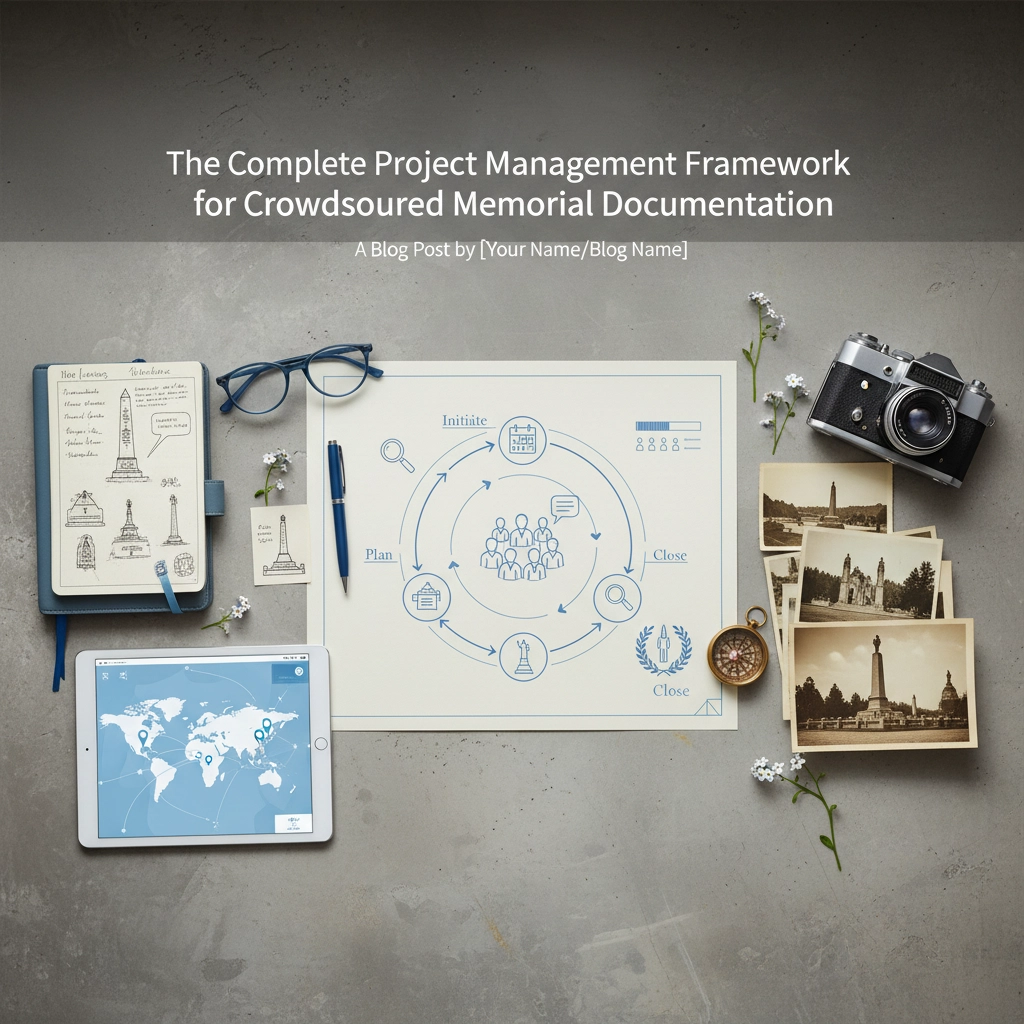
Managing crowdsourced memorial documentation requires more than good intentions and willing volunteers. You need a systematic framework that transforms scattered community contributions into a cohesive, searchable, and lasting tribute to our service members. Without proper project management, even the most passionate volunteer efforts can result in inconsistent records, frustrated contributors, and memorial stories that slip through the cracks.
Your success hinges on coordinating four critical dimensions: strategic design, technical infrastructure, operational processes, and community engagement. Master these elements, and you'll create a sustainable system that honors our veterans while building meaningful connections between families, researchers, and communities.
Foundation: Design Principles That Drive Results
Start by defining your project's design properties and operational conditions before recruiting a single volunteer. Design properties encompass how you structure crowdsourcing tasks: whether volunteers transcribe documents, tag photographs, verify locations, or collect personal stories. Each task type demands different workflows, quality control measures, and volunteer skill sets.
Your project conditions include organizational support, institutional partnerships, and collaborative frameworks necessary for long-term success. Memorial documentation projects often fail because organizations underestimate the coordination required between historical societies, veteran organizations, families, and technical teams.
Create distinct work streams for different contribution types. Biographical transcription requires different management approaches than photo identification or personal story collection. By segmenting these activities from the start, you'll apply appropriate quality standards and training to each volunteer group.
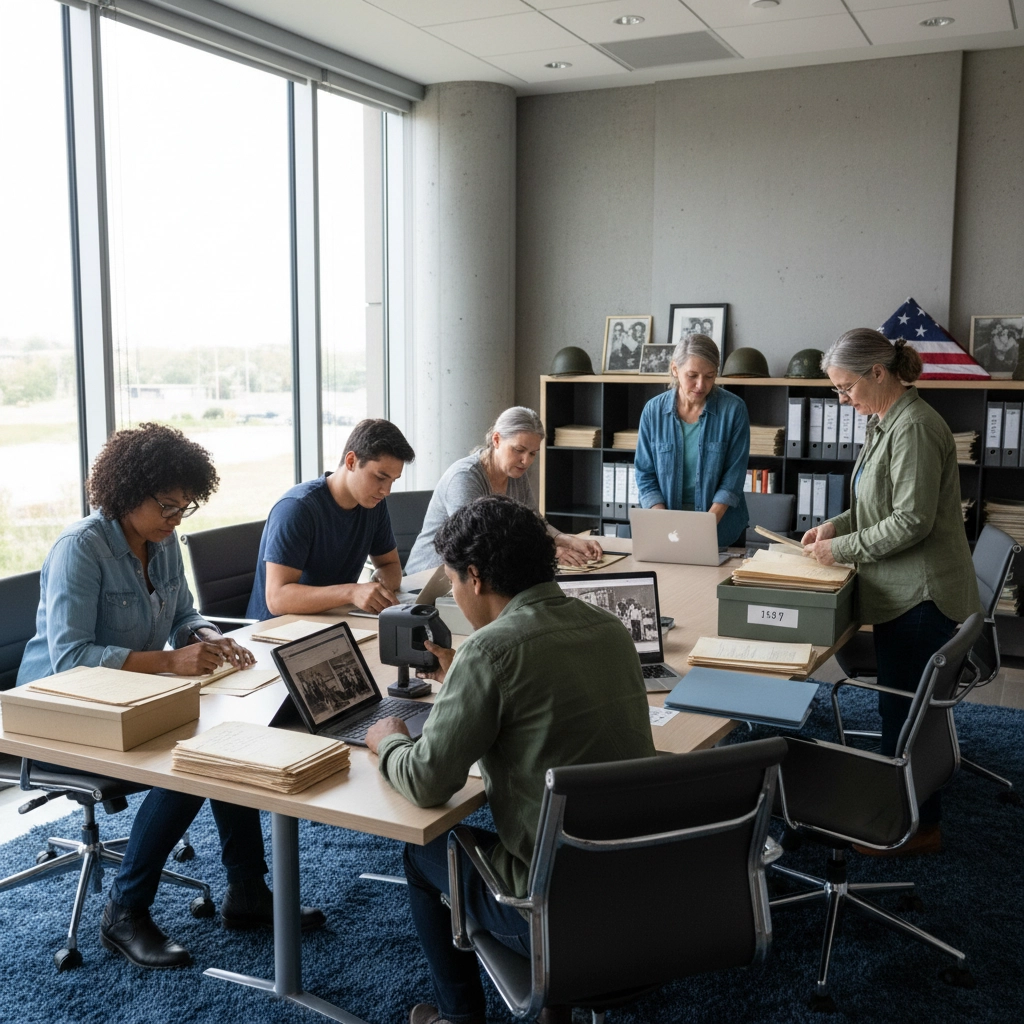
Define clear objectives for each work stream. Are you preserving service records, collecting family memories, or documenting physical memorials? Your framework must align volunteer contributions with these specific goals while maintaining flexibility for unexpected discoveries that emerge during the documentation process.
Technical Infrastructure: Building Your Digital Foundation
Centralize all documentation in a single, accessible platform rather than scattering content across multiple systems. Choose web-based solutions that volunteers can access without specialized software or extensive training. Your platform selection should balance your organization's technical capacity with volunteer accessibility needs.
Plan data integration workflows before launching your crowdsourcing initiative. Crowdsourced contributions rarely fit neatly into existing content management systems or metadata standards. Document exactly who owns contributed data, where it will be stored permanently, in what formats it will be preserved, and how it integrates into your discovery systems.
Address technical barriers that prevent data integration. Character limits in metadata fields, notes sections hidden from search functionality, and incompatible file formats can derail your project's impact. If immediate integration isn't possible, plan alternative preservation methods like repository deposits or parallel database systems.
Create backup protocols for contributed content. Volunteers invest significant time and emotional energy in memorial documentation. Protect their contributions with redundant storage, regular backups, and clear data ownership agreements that prevent future access issues.
Operational Process Framework: Systematizing Success
Develop standardized templates that ensure consistency while reducing volunteer intimidation. Your templates should include sections for objectives, biographical information, location data, source verification, and personal narratives. Use numbered lists and tables within templates to clarify required information and accelerate content creation.
Implement documentation-as-you-go methodology rather than treating memorial records as end-of-project deliverables. Integrate new information immediately as it emerges through research meetings, volunteer submissions, or institutional records. This approach maintains momentum and reduces the cognitive burden of organizing accumulated information later.

Design intuitive classification systems based on organizational structures your volunteers already understand. Hierarchy-based arrangements work well because people naturally think in terms of categories and subcategories. Organize memorial records by functional areas like memorial type, service branch, time period, or geographic location.
Establish quality checkpoints throughout your workflow rather than relying on final review stages. Create verification protocols for source citations, fact-checking procedures for biographical claims, and approval processes for sensitive personal information. These checkpoints prevent errors from compounding while maintaining volunteer engagement.
Community Engagement: Managing People and Motivation
Assign functional leads to oversee different aspects of your memorial documentation work. These leaders provide accountability across memorial categories, time periods, or community groups while ensuring consistent documentation standards. Functional leads don't create all content themselves but provide oversight, training, and quality assurance for their assigned areas.
Designate crowdsourcing champions within your leadership team to promote initiatives and celebrate volunteer milestones. Memorial documentation often receives less attention than more visible organizational activities, so active promotion becomes essential for sustained volunteer participation.
Create discussion spaces where volunteers ask questions, troubleshoot challenges, and share insights with peers and staff. Open reference forums allow project managers and subject matter experts to answer questions publicly, creating knowledge repositories for future volunteers while demonstrating institutional responsiveness.

Develop recognition systems that acknowledge different contribution levels and types. Some volunteers contribute hours of transcription work, while others provide crucial family photographs or personal stories. Your recognition approach should celebrate diverse contributions rather than focusing solely on quantity metrics.
Quality Assurance: Ensuring Accuracy and Completeness
Implement community validation systems that leverage volunteer expertise for peer review. Design your platform to allow contributors to verify, correct, or enhance each other's work. This creates natural quality control mechanisms while building collaborative relationships within your volunteer community.
Establish metadata enhancement protocols that maximize the discoverability of crowdsourced content. Volunteer contributions: transcriptions, tags, notes, and biographical context: dramatically improve memorial record accessibility, but only if they integrate into your search functionality and descriptive systems.
Create escalation procedures for handling conflicting information, sensitive content, or disputed facts. Memorial documentation often involves family memories that may conflict with official records or other contributed information. Develop clear protocols for researching discrepancies and communicating resolution decisions to all stakeholders.
Monitor contribution patterns to identify potential quality issues or volunteer burnout. Sudden changes in submission frequency, declining accuracy rates, or negative community feedback can signal problems requiring immediate attention. Regular monitoring allows you to address issues before they impact overall project quality.
Implementation Timeline: Phased Deployment Strategy
Phase 1: Planning and Design (Weeks 1-4)
Define memorial scope, document types, and contribution categories. Design task taxonomy and create standardized templates. Select your crowdsourcing platform and conduct staff testing. Plan data integration workflows and identify functional leads and project champions.
Phase 2: Infrastructure Setup (Weeks 5-8)
Configure your chosen platform and design user-friendly interfaces. Establish content management system integration protocols and create documentation templates. Set up community discussion spaces and develop comprehensive volunteer onboarding materials.
Phase 3: Launch and Initial Growth (Weeks 9-16)
Recruit your initial volunteer cohort through targeted outreach to veteran organizations, historical societies, and community groups. Monitor data quality and participant engagement closely. Provide active community management and document lessons learned for platform improvements.
Phase 4: Scale and Stabilization (Weeks 17+)
Expand volunteer base and diversify task offerings based on community interests and institutional needs. Establish routine maintenance schedules and platform updates. Integrate verified crowdsourced data into discovery systems and celebrate community contributions publicly.
Your framework success depends on viewing memorial documentation as collaborative knowledge creation rather than isolated institutional work. By coordinating design principles, technical infrastructure, operational processes, and community engagement, you transform volunteer contributions into lasting tributes that honor service members while building meaningful connections across generations.
The veterans and families whose stories you preserve deserve nothing less than your most systematic, respectful, and sustainable approach to memorial documentation. Your framework becomes their lasting legacy.