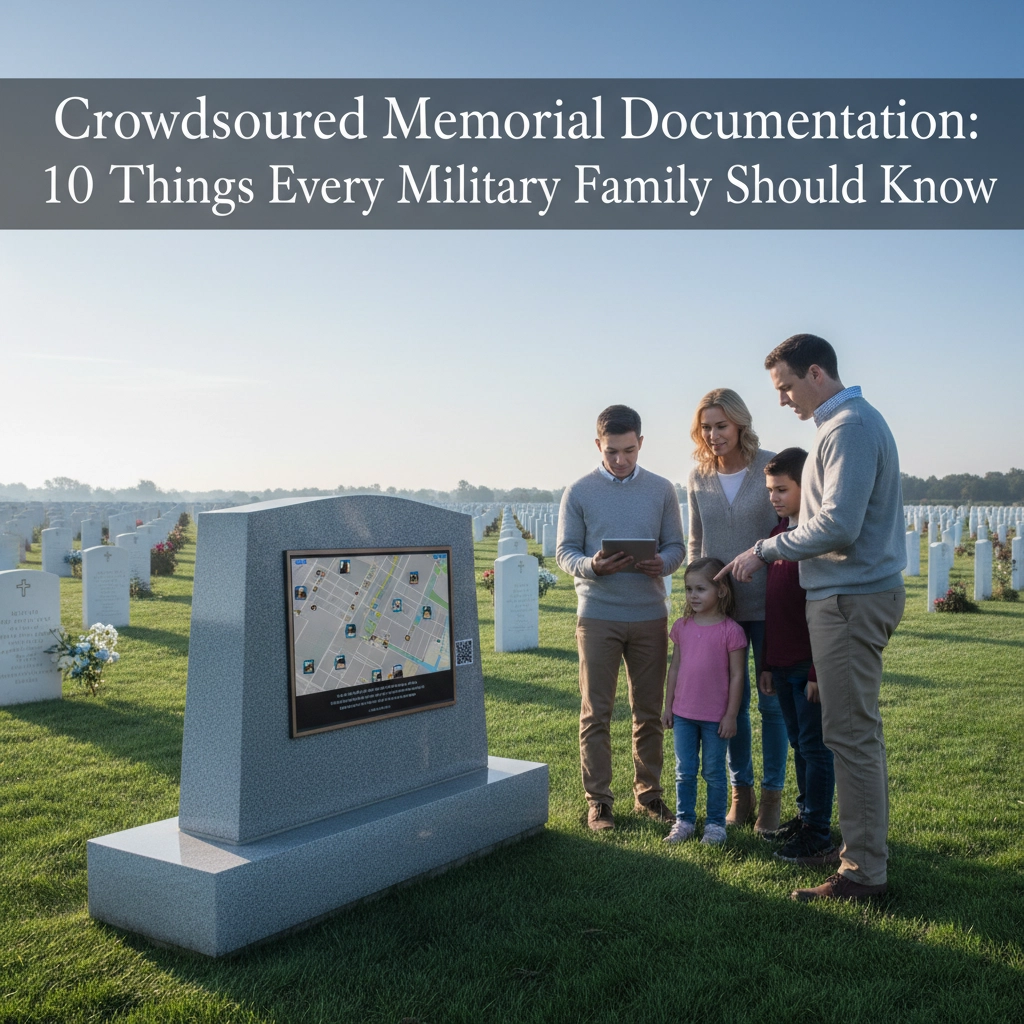
Modern technology has revolutionized how we preserve and share military service stories. Crowdsourced memorial documentation represents a powerful way for your family to contribute to and benefit from collective efforts to honor our nation's veterans. Understanding how these collaborative platforms work can help you make informed decisions about preserving your loved one's legacy.
1. Leverage Multiple Memorial Platforms for Maximum Reach
Start your memorial documentation journey by exploring established platforms that serve different purposes. Fold3.com specializes in military records and allows you to create memorial pages where you can attach photographs, documents, and personal stories about your service member. Your family benefits from their extensive historical military collections, though premium access provides additional resources.
FamilySearch.org offers completely free memorial services with unlimited photo and story uploads. This platform excels at connecting your veteran's story within broader family genealogy projects. Your memorial becomes part of a larger family narrative that future generations can explore and expand upon.
Consider using both platforms strategically: Fold3.com for military-specific documentation and FamilySearch.org for comprehensive family history integration. Your dual approach ensures your veteran's story reaches different audiences while maximizing preservation opportunities.
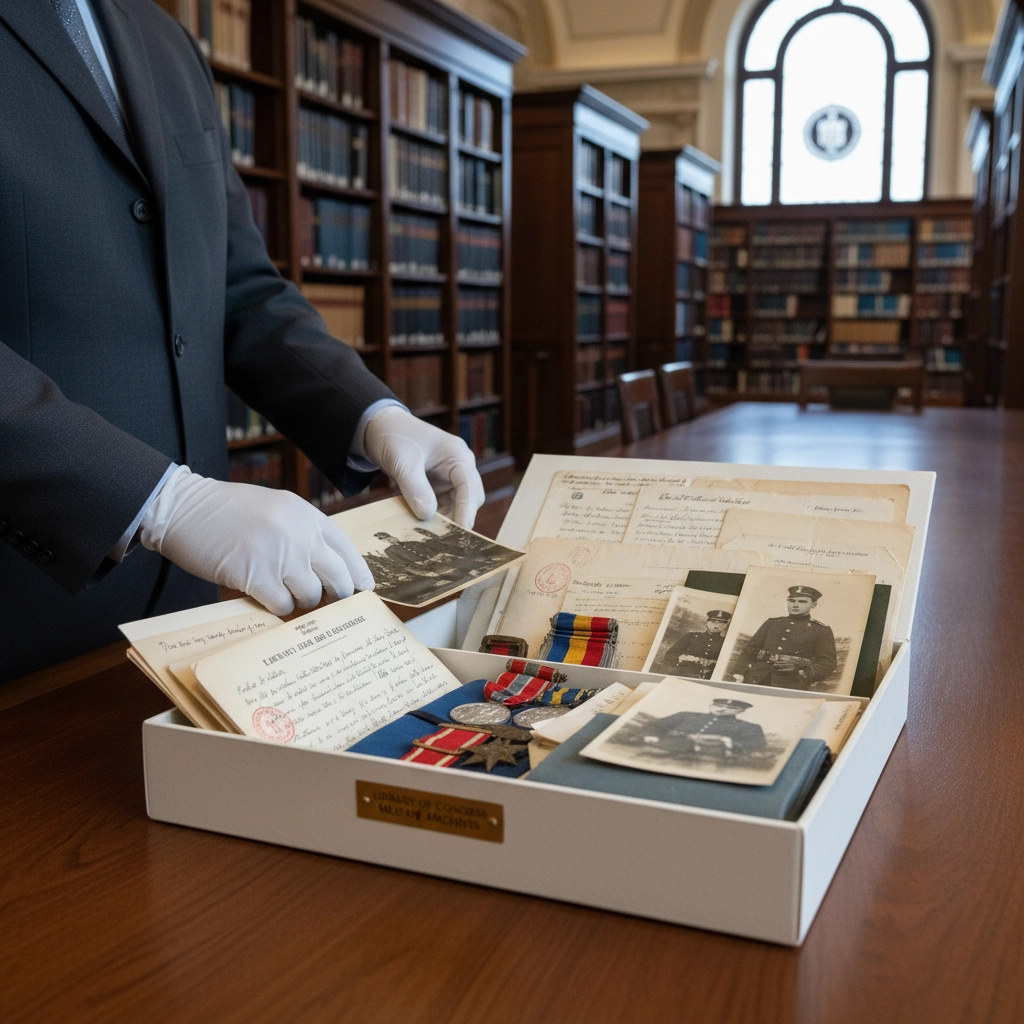
2. Contribute to the Veterans History Project at the Library of Congress
Submit your veteran's materials to the congressionally mandated Veterans History Project managed by the Library of Congress. This national repository has collected over 85,000 collections since 2000, preserving oral histories, personal documents, and photographs from World War I through recent conflicts in Iraq and Afghanistan.
Your submission receives professional archival treatment and becomes permanently accessible to researchers, families, and historians. The VHP accepts materials from any veteran or family member, ensuring your loved one's story becomes part of America's official military heritage record.
Prepare oral history recordings, personal letters, photographs, and service documents for submission. Your contribution helps create a comprehensive national archive while ensuring your veteran's story receives institutional preservation that outlasts individual family efforts.
3. Organize Essential Documents Before Creating Memorials
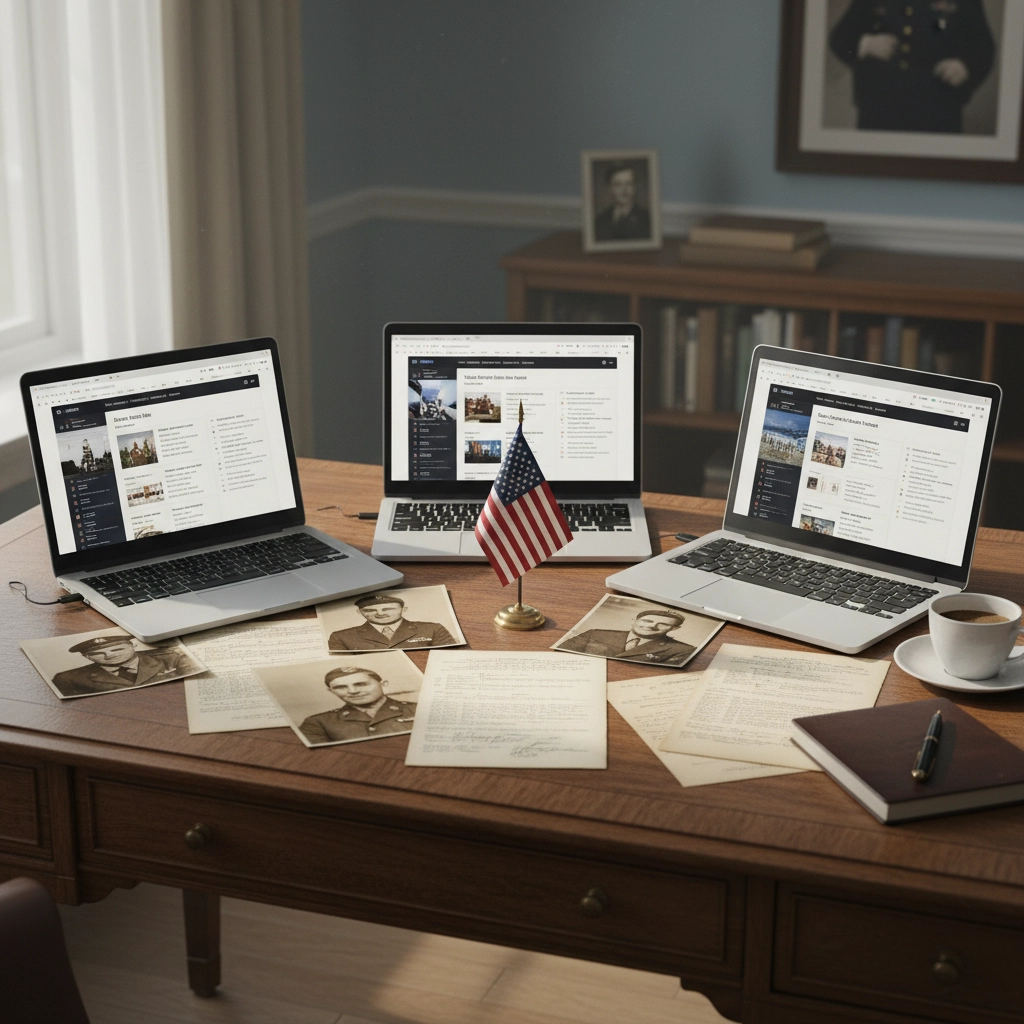
Gather critical military and personal documents before beginning any memorial project. Your collection should include DD-214 discharge papers, VA rating decisions, marriage and birth certificates, death certificates, and relevant legal documents. These materials form the foundation of accurate, comprehensive memorial documentation.
Create digital copies of all physical documents to prevent loss or damage during the memorial creation process. Your organized approach ensures you can provide complete information when contributing to crowdsourced platforms or institutional archives.
Store original documents in secure, climate-controlled environments while using copies for memorial projects. Your preservation strategy protects irreplaceable materials while enabling active participation in collaborative documentation efforts.
4. Understand Privacy Settings and Sharing Controls
Configure privacy settings thoughtfully when creating online memorials. Most platforms allow you to control who can view, comment on, or contribute additional information to your veteran's memorial page. Your family maintains authority over how much personal information becomes publicly accessible.
Fold3.com memorials can be shared via direct links with anyone, including non-subscribers, giving you flexibility in controlling access. Your privacy choices should reflect your family's comfort level with public sharing while considering the educational value of your veteran's story.
Review privacy policies regularly as platforms update their terms of service. Your ongoing attention ensures your family's preferences remain properly implemented as technology and platform policies evolve.
5. Participate in Collaborative Research Projects
Join crowdsourcing projects that invite families to contribute to broader historical research initiatives. The Library of Congress actively seeks Civil War soldier records and other military documentation for their expanding digital collections. Projects like Normandy1944.info work to ensure comprehensive representation of service members in historical archives.
Your participation helps complete unit histories and battle documentation that benefit all families researching similar military service. Connect with other families researching the same regiments, divisions, or military campaigns to share resources and information.
Collaborative research often uncovers previously unknown details about your veteran's service through connections with other family researchers. Your contributions create networks of information that enhance everyone's understanding of shared military experiences.
6. Preserve Digital Materials from Modern Service
Address the unique challenges of preserving digital materials from recent military service. Modern service members increasingly use emails, digital photographs, and social media instead of traditional letters and journals. Your preservation strategy must account for evolving file formats and software compatibility.
Convert digital materials to stable, widely-supported formats before contributing to memorial platforms. Your proactive approach prevents future access problems as technology continues changing. Consider printing important digital communications to create physical backups.
Seek guidance from memorial platforms about their preferred digital file formats and size limitations. Your preparation ensures successful uploads while maintaining quality and accessibility of digital materials.
7. Access Military Personnel Files Through Official Channels
Request official military personnel files through the National Personnel Records Center in St. Louis for comprehensive service documentation. These files contain complete military service records for every person who has served and provide authoritative information for memorial projects.
Integrate official records with family-held materials to create complete service narratives. Your combination of official documentation and personal materials provides balanced, accurate representation of your veteran's military experience.
Use official records to verify information before contributing to crowdsourced platforms. Your attention to accuracy enhances the credibility of collaborative memorial efforts while honoring your veteran's true service record.
8. Coordinate with Local Preservation Institutions
Explore opportunities with local public libraries, museums, and historical societies that preserve military service records. These institutions offer alternatives to national platforms while maintaining archival standards for material preservation.
Your local connections often provide more personalized service and community-focused preservation efforts. Regional institutions may have specific interest in local military history that makes your veteran's story particularly valuable to their collections.
Consider donating duplicate materials to local institutions while maintaining copies for family use. Your multi-institutional approach ensures broader preservation while keeping materials accessible within your community.
9. Create Comprehensive Memorial Narratives
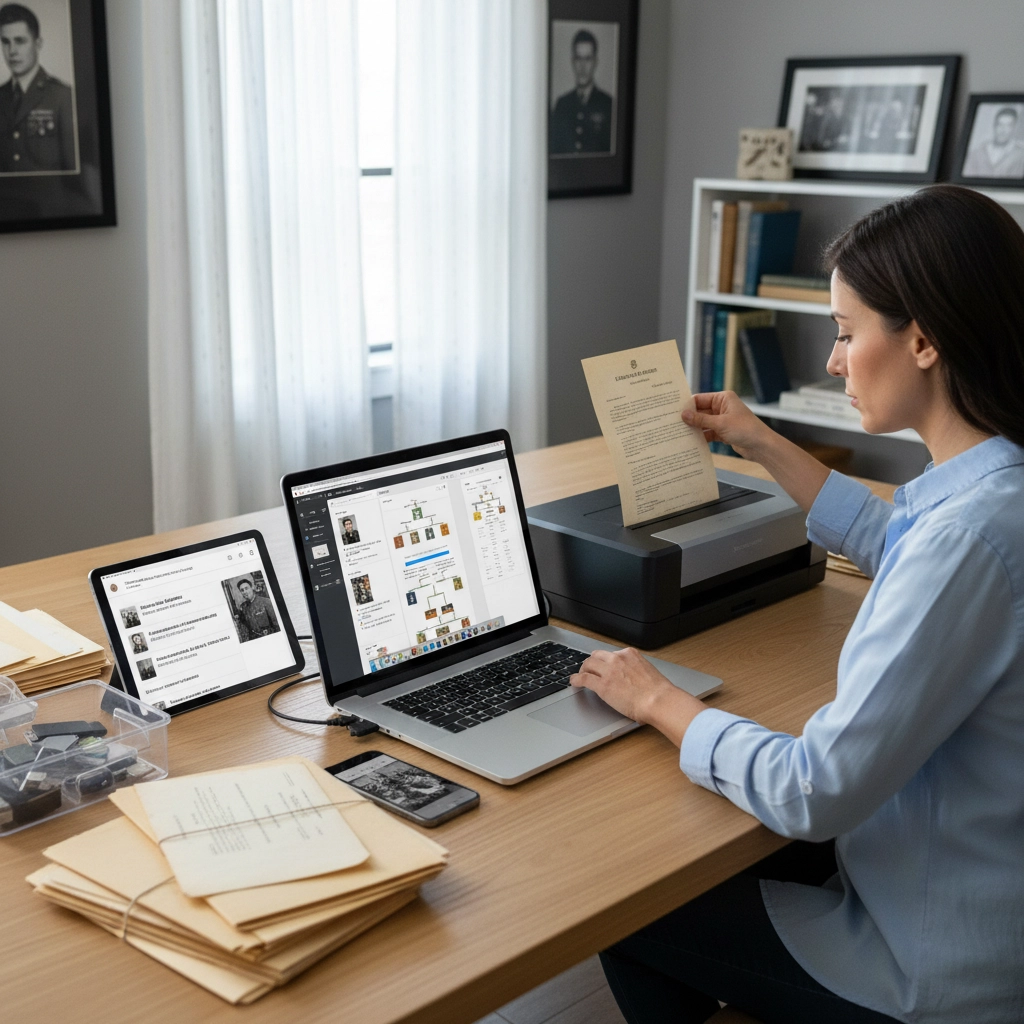
Develop detailed memorial pages that go beyond basic service information. Include personal stories, family memories, photographs from different life periods, and connections to civilian accomplishments alongside military service details.
Your comprehensive approach creates engaging memorials that help visitors understand your veteran as a complete person rather than just military service records. Add context about historical events, unit experiences, and personal relationships that shaped your veteran's life.
Update memorial content regularly as you discover new information or family members contribute additional materials. Your ongoing curation keeps memorials current while encouraging continued family engagement in preservation efforts.
10. Establish Access Plans for Future Generations
Designate family members who can access and maintain memorial accounts after your death. Complete access authorization forms with memorial platforms and document login information in secure locations accessible to designated family members.
Your succession planning ensures continuity of memorial maintenance and prevents loss of access to digital materials. Train multiple family members on platform navigation and content management to distribute knowledge across generations.
Create written documentation about memorial locations, account details, and family contact information for platforms hosting your materials. Your organized approach helps future family members locate and maintain your veteran's digital legacy effectively.
Building Lasting Digital Legacies
Crowdsourced memorial documentation offers powerful opportunities for military families to preserve, share, and enhance their veterans' stories through collaborative efforts. Your thoughtful participation in these platforms creates lasting tributes while contributing to broader historical preservation that benefits all military families.
Start with one platform that matches your family's needs and comfort level, then gradually expand your memorial presence as you become familiar with different platforms' capabilities. Your systematic approach ensures quality documentation while preventing overwhelm during emotionally challenging memorial creation processes.
The combination of institutional preservation through projects like the Veterans History Project and family-controlled platforms like Fold3.com creates comprehensive memorial strategies that serve both personal and historical purposes. Your veteran's story becomes part of America's military heritage while remaining accessible and meaningful to your family for generations to come.